
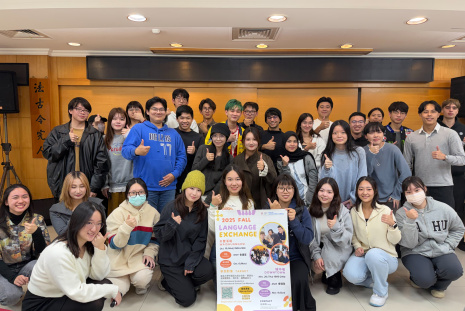
2025 年 11 月 20 日,由東吳大學國際處主辦的語言交換活動於城中校區 2123 會議室登場,為本學期第二場語言交流畫下熱烈回響。活動延續第一次活動的三輪討論形式,吸引來自世界各地的交換學生、本地學生及國際處志工參與,現場多國語言交錯,展現東吳校園的國際化風貌。
本次活動依序進行三輪分組交流,每組由不同國籍學生組成,透過主題卡引導,使討論自然延伸。然而,由於參與者背景不同,本次的交流內容更具多元性,尤其因大陸交換生較多,繁體與簡體字的差異成為多組熱烈討論的主題。第一輪聚焦自我介紹與語言學習歷程,學生們分享自己學中文的時間長短,以及初次接觸繁體字時的感受。有學生提到自己先習慣簡體字,再逐漸適應繁體字的筆畫與構造,彼此的經驗交流讓語言學習話題顯得生動有趣。
第二輪延續語言與文化差異的討論,學生們談到繁簡字的美感、書寫方式與使用環境,也分享是否曾前往中國旅遊,並比較不同中文文化圈的語言現象。外國交換生則談到各自國家在學習中文時遇到的挑戰,例如字形辨識、聲調掌握與語境理解,讓整體討論更具跨文化深度。
第三輪則以更為開放的生活交流為主題,內容涵蓋台灣美食推薦、最想造訪的亞洲國家,以及在台生活所面臨的文化衝擊。不少學生分享自己對台灣飲食的適應過程、搭乘捷運的經驗與日常禮節上的差異。其中,一位法國交換生以幽默的方式分享,他來台灣幾個月以來幾乎只在台北旅遊,並笑稱自己來台灣其實是為了「學英文」,逗得全場笑聲不斷,讓活動氣氛更加輕鬆。
活動最後,全體參與者合影留念,並交換聯絡方式,期盼能在未來持續交流。多位學生表示,語言交換活動讓他們在舒適的氛圍中練習語言、認識新朋友,也從跨文化的互動中獲得新的視角與靈感。國際處表示,將持續舉辦此類活動,促進學生在多語環境中成長,讓東吳成為連結世界的友善校園。
Language Exchange Connect Students at Downtown Campus
On November 20, 2025, the second Language Exchange event of the semester took place in Room 2123 at Soochow University’s Downtown Campus. Exchange students, local students, and volunteers from the Office of International and Cross-Strait Affairs gathered for the activity, which continued the three-round discussion format introduced earlier in the semester. The event once again provided a welcoming setting for students from different backgrounds to interact and share their experiences.
Participants were arranged into small groups consisting of students from various countries, with discussion cards helping guide the conversations. Although the overall structure was similar to the previous session, the topics naturally evolved according to the backgrounds of the participants. With a larger number of exchange students from Mainland China attending this event, comparisons between traditional and simplified Chinese characters became an important theme throughout the discussions.
During the first round, students introduced themselves and talked about their experiences studying Chinese. Many participants shared the challenges they encountered when moving between simplified and traditional characters, while others mentioned noticing differences in stroke order and writing styles. These conversations offered students an opportunity to reflect on their individual language-learning journeys and learn from one another’s perspectives.
The second round broadened the discussion to include cultural and linguistic observations. Students compared different writing systems in terms of visual style, everyday usage, and learning methods. Some participants also shared their travel experiences in China and discussed their impressions of different Chinese-speaking regions. Exchange students from various countries talked about the difficulties they face when learning Chinese, including mastering tones, remembering characters, and understanding subtle differences in daily communication.
In the third round, the conversations gradually shifted toward more casual topics related to daily life. Students exchanged recommendations for Taiwanese food, discussed the Asian destinations they hope to visit in the future, and shared stories about adapting to life in Taiwan. Topics such as transportation, food culture, and social customs were frequently mentioned. One particularly memorable moment occurred when a French exchange student jokingly admitted that he had spent most of his time in Taiwan traveling only around Taipei, adding that he had come to Taiwan “to learn English,” which drew laughter from everyone in the room.
The event concluded with group photos and friendly conversations as participants exchanged contact information and continued chatting after the activity ended. Many students shared that the Language Exchange provided not only a chance to practice languages, but also a meaningful opportunity to learn about different cultures through open dialogue. The Office of International and Cross-Strait Affairs expressed its hope to continue organizing similar events, further supporting Soochow University’s efforts to build a diverse and globally connected learning environment.