
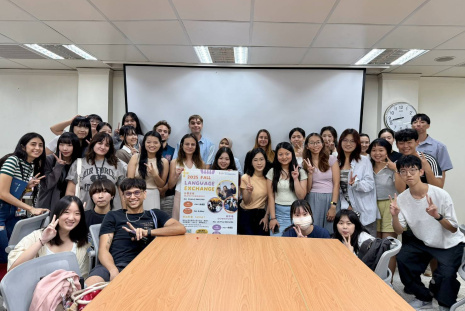
2025年10月15日,由東吳大學國際處主辦的語言交換活動於外雙溪校區G101熱烈舉行。活動吸引了來自世界各地的交換學生以及本地學生踴躍參與,現場氣氛活潑,展現出語言與文化交融的多元魅力。
活動以一場生動的破冰遊戲拉開序幕。參與者需從問題清單中挑選三個題目,向三位不同的同學提問並記錄答案,問題涵蓋「你為什麼選擇台灣作為交換地?」「你最喜歡的台灣美食是什麼?」「你在東吳大學最喜歡的地方是哪裡?」等多樣主題。短短數分鐘內,教室裡充滿中文、英文、日文及韓文的交流聲,學生在笑聲與對話中打破陌生感,為後續的語言互動活動做好熱身。
破冰後,正式的語言交換活動隨即展開。學生被隨機分組,每組由來自不同國家的同學組成,並由國際處志工使用話題卡引導討論,使對話自然流動、語言練習更貼近日常生活。第一輪主題為自我介紹與語言學習,學生分享各自的主修、曾經交流的國家,以及希望學習的語言,並表示「台灣人非常友善,讓人感到溫暖」。第二輪則延伸至文化差異與語言趣談,討論學中文的原因、繁簡字差異、注音與拼音系統的起源等話題,甚至有學生發現「ㄅㄆㄇ與韓文字母很像」,引發組員會心笑聲。第三輪氣氛更加輕鬆自由,學生交流台灣美食推薦、想造訪的亞洲國家、以及在台生活的文化適應經驗,討論範圍涵蓋火鍋、美食、公共交通及社交禮儀,甚至有人分享伊斯坦堡的城市風光。學生們也表示,希望能在台灣停留更久,因為與國際朋友的對話不僅能提升英文能力,也拓展了對世界的認識。
整場活動中,教室彷彿化身縮小版「地球村」,中文、英文、日文與韓文交錯,展現學生們的熱情與好奇。活動最後,交換生與志工合影留念,並交換聯絡方式,延續交流的機會。許多學生反映,此次活動不僅增進了語言能力,更透過真實對話深入了解不同文化。
國際處表示,希望藉由語言交換活動,讓交換生在東吳大學的學習期間,不僅能提升中文能力,也能感受多國文化交流的樂趣,讓語言成為連結世界的橋樑。
Language Exchange Brings Cultures Together at SU
On October 15, 2025, Soochow University's Office of International and Cross-Strait Affairs hosted a lively Language Exchange Event at the Waishuanghsi Campus in Room G101. The event attracted enthusiastic participation from both exchange and local students, creating an energetic atmosphere filled with cultural interaction and linguistic diversity.
The event began with an engaging icebreaker activity. Participants were asked to select three questions from a prepared list and ask them to three different peers while recording their answers. The questions ranged from “Why did you choose Taiwan for your exchange program?” and “What’s your favorite Taiwanese food?” to “What’s your favorite place at Soochow University?” Within minutes, the classroom buzzed with conversations in Chinese, English, Japanese, and Korean. Students quickly broke the ice, learned more about one another, and set a positive tone for the activities ahead.
Following the icebreaker, the main language exchange sessions began. Participants were randomly divided into small groups consisting of students from different countries. Guided by discussion cards prepared by ICAE volunteers, each group engaged in lively conversations. The first round focused on self-introductions and language learning. Students shared their majors, countries they had previously studied in, and the languages they hoped to learn. Many participants mentioned that people in Taiwan are “very kind and welcoming.”
The second round explored cultural differences and language-related fun facts. Topics included motivations for learning Chinese—such as its global importance or career advantages—differences between traditional and simplified Chinese characters, and comparisons between the Zhuyin and Pinyin systems. One participant even remarked that “Zhuyin symbols look similar to Korean letters,” sparking laughter across the room.
In the third round, discussions became more relaxed and diverse, covering topics such as Yunnan mushroom hotpot, real estate in Paraguay, Dragon Boat traditions in Japan and Taiwan, French numbers, and even Istanbul’s cityscape. Several students expressed their desire to “stay longer in Taiwan,” noting that conversations with international peers “not only help improve English but also broaden their worldview.”
Throughout the event, the room was filled with multilingual conversations, creating a “mini global village” atmosphere. As the event concluded, exchange students and volunteers gathered for a group photo and exchanged contact information. Many participants shared that the event helped them make new friends while gaining deeper cultural insights through genuine conversation.
The Office of International and Cross-Strait Affairs hopes to continue organizing similar activities in the future, allowing exchange students to not only learn Chinese during their time at Soochow University but also experience the joy of multicultural exchange and build connections across cultures.